
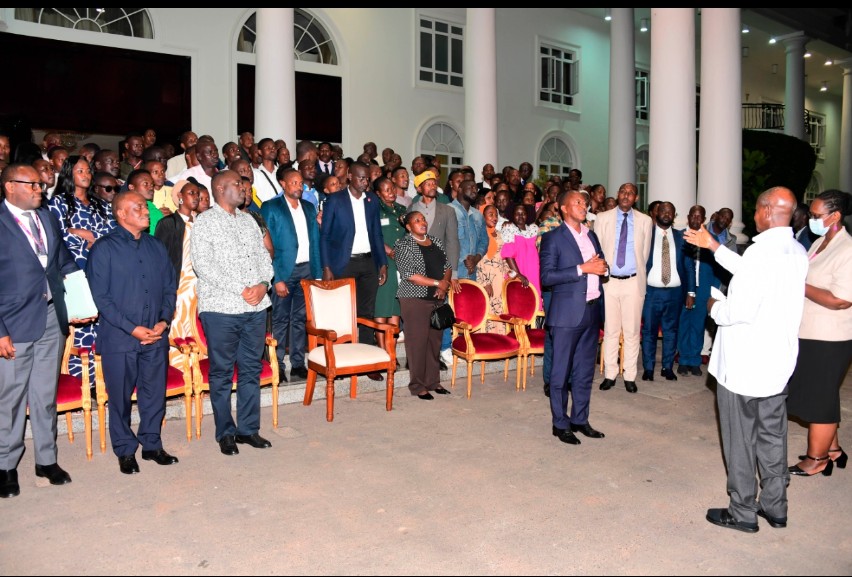
State House, Entebbe – June 25, 2025
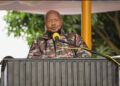
President Yoweri Kaguta Museveni has reaffirmed his commitment to protecting the rights and identity of the Abavandimwe (Banyarwanda of Ugandan origin), calling for an end to discrimination and bureaucratic hurdles faced by long-time residents of Rwandan descent living in Uganda.
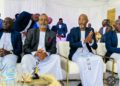
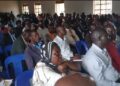
Speaking during a high-level meeting with leaders of the Abavandimwe community at State House Entebbe, President Museveni emphasized that individuals who have lived in Uganda for decades and are verified by local authorities must be fully recognized as Ugandan citizens.
“The people who have been here for generations and are known by their communities should not be harassed or denied services. They deserve respect and their rights,” the President said.
Museveni, citing his personal upbringing in Ntungamo among the Bahororo, said Ugandan citizenship must be upheld as a constitutional right, not frustrated through unlawful scrutiny or administrative delays.
“By the 1950s, when I was growing up in Ntungamo, we the Bahororo were already part of Uganda. The 1995 Constitution is clear—those who were here by 1926 are citizens,” Museveni emphasized.
Executive Order on Citizenship:
Invoking Article 99 (1) and (4) of the Constitution, the President reiterated an executive directive guiding government officials on lawful citizenship determination for long-term residents seeking National IDs and passports.
Key points include:
- Verification through local leaders: Any applicant endorsed by their LC1, LC3, GISO, or RDC should be presumed a legitimate Ugandan.
- Birthright recognition: Any person born in Uganda should not be denied citizenship unless compelling contrary evidence is presented.
- Community-based identification: Where official records are unavailable, testimony from relatives under oath, backed by elders and local authorities, should be acceptable.
- Proper channels: Immigration officers are instructed to refer citizenship disputes to NIRA, and not make arbitrary decisions.
“Uganda is not America. Here, we don’t rely on graveyards or data systems to prove ancestry. We use local knowledge,” Museveni said, criticizing rigid bureaucratic attitudes.
He further warned against illegal barriers being imposed on vulnerable communities like the Abavandimwe and proposed the formation of a citizenship verification committee to probe dubious cases while protecting genuine ones.
Dual Citizenship Dilemma:
While supporting inclusive citizenship, President Museveni made it clear that dual allegiance between Uganda and Rwanda cannot be tolerated.
“What we cannot accept is dual citizenship between Rwanda and Uganda. Please decide. You cannot be both,” he said.
“Even me, I am a Muhooro. Our people are across Rwanda, Tanzania, and Uganda—but I was born here. If I want to be Rwandan, I go to Rwanda. But I can’t say I’m both Munyankole and Munyarwanda.”
Call for Equal Treatment:
Mr. Frank Gashumba, Chairperson of the Abavandimwe Council, welcomed the President’s intervention and appealed for equal treatment of Banyarwanda citizens.
“We are Banyarwanda of Uganda, not Rwanda. As long as one holds a Ugandan National ID, they should receive a passport without bias,” Gashumba stated.
He raised concern over discrimination in issuance of travel documents, saying such practices amount to a denial of both identity and opportunity.
“Our children are being unfairly denied passports. This is more than a document—it’s access to opportunity.”
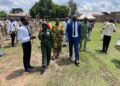
The meeting was attended by senior government officials including Gen. David Muhoozi (Minister of State for Internal Affairs), Ms. Rosemary Kisembo (Executive Director, NIRA), and Brig. Johnson Namanya (Commissioner, Citizenship and Passport Control, DCIC).