
By Eye Media Uganda | Kampala | August 14, 2026
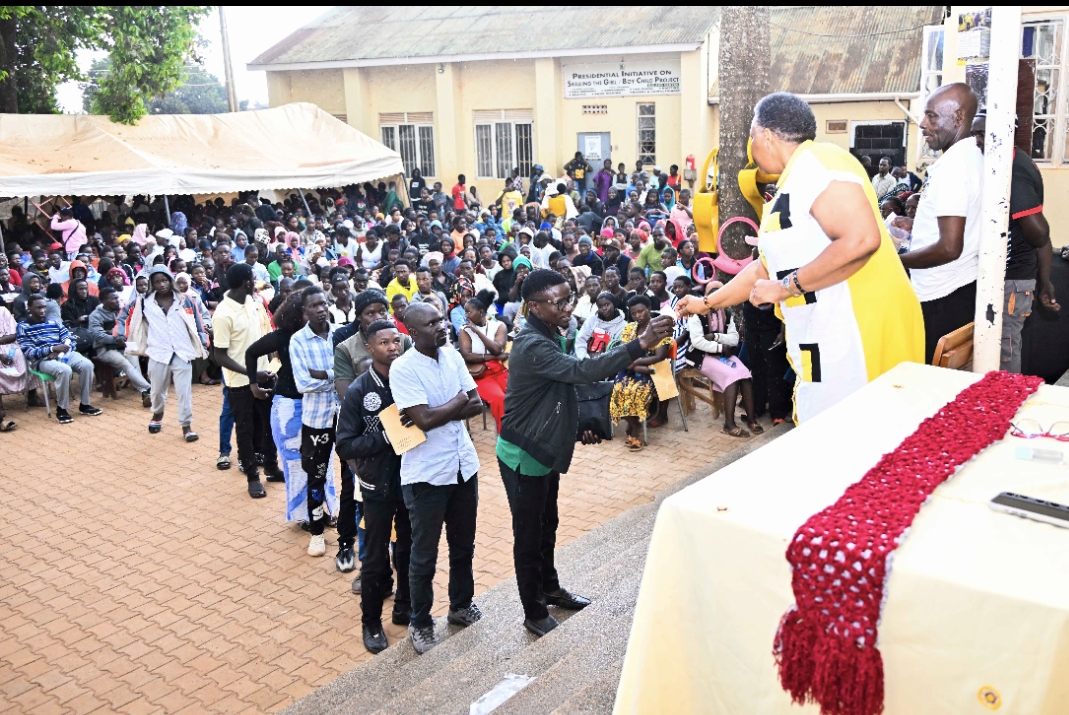
Thousands of young people on Thursday, August 13, 2026, flocked to Presidential skilling centres across Kampala to enrol for free vocational training.
At least 3,620 disadvantaged youth registered for the eighth cohort at five of the nine centres, highlighting growing demand for practical skills.
The Presidential Initiative on Skilling the Girl and Boy Child (PISGBC) targets vulnerable young people aged between 16 and 35. It equips them with practical skills for self-employment, job creation and improved livelihoods.
The free vocational training programme was established by State House in 2017 on the directive of President Yoweri Kaguta Museveni.
The six-month programme offers courses including tailoring, hairdressing, bakery, shoemaking, knitting, embroidery, weaving and leather design. Other centres offer electrical installation, electronics, plumbing, welding, carpentry, construction and motor vehicle training.
At the end of the programme, trainees will be assessed by the Uganda Vocational and Technical Assessment Board (UVTAB) before graduation.
The nine centres are spread across Kampala’s five divisions of Kawempe, Rubaga, Makindye, Nakawa and Kampala Central.
They include Wandegeya Market, Mulago Community Hall, Mutundwe-All Saints Church of Uganda, Nakulabye-Our Lady of Fatima Catholic Church and Luzira Prisons. Others are Subway Skilling Centre, Wabigalo Parish Community Hall, Kigoowa-Ntinda and Kikoni-Makerere Community Hall.
Speaking at Mulago Skilling Centre, Dr. Faith Katana Mirembe, the Special Presidential Assistant on Education and Skilling, praised President Museveni for initiating the programme.

Dr. Katana, who heads PISGBC, said the initiative has enabled thousands of young people to acquire skills for self-employment and poverty reduction.
“The programme is designed to cater for young people who may not have had a chance to access formal education or who dropped out of school,” Dr. Katana said.
She said the programme has also helped transform young people who previously engaged in destructive behaviour.
“We have an overflow of young people who have been involved in bad practices like drug abuse and theft, but now they are changed citizens,” she said.
Dr. Katana thanked parents and guardians for embracing the initiative and encouraging young people to enrol.
She clarified that the nine Kampala centres are reserved for vulnerable youth living within the city. Applicants from other districts are catered for through Presidential Industrial Skilling Hubs established across the country.

Dr. Katana particularly encouraged trainees to consider weaving, saying it provides opportunities for value addition using locally available materials.
“This dress I am putting on was made from this skilling centre and it has a very good fabric. I therefore encourage you to do weaving,” she said.
She said beneficiaries are expected to use their skills to improve their livelihoods while creating employment and training others.
“We are training industrialists,” Dr. Katana said, linking the programme to Uganda’s wider industrialisation agenda.
Mr. Nkwanga David, the administrator of Mulago Skilling Centre, said the programme has particularly benefited disadvantaged young people, including those commonly described as “ghetto youth”.
He said trainees receive mentorship and mindset-change programmes alongside practical training.
“The hands-on skills help the students to become self-employed and responsible after completing the six-month training,” Mr. Nkwanga said.
Enrolment figures from the five centres showed strong interest across several vocational courses.
Mutundwe Skilling Centre enrolled 653 students against a target of 680. Tailoring, hairdressing and bakery attracted 160 students each.
Another 75 registered for shoemaking, 38 for knitting and 60 for embroidery. Only 27 places remained, including 22 for knitting and five for shoemaking.
Mulago recorded the highest enrolment among the five centres, registering 1,035 students across 11 courses.
Hairdressing led with 250 students, followed by tailoring with 147 and electrical installation with 143. Electronics attracted 104 students, plumbing 95 and welding 83.
Construction registered 48 students, carpentry 27, embroidery 73, knitting 29 and leather design 36.
Luzira Skilling Centre enrolled 642 students. Hairdressing attracted 218, bakery 147 and tailoring 145.
Another 47 students enrolled for embroidery, 29 for leather design, 36 for knitting and 20 for weaving.
Wabigalo Skilling Centre registered 730 students, with motor vehicle training leading at 134.
Electrical installation attracted 129 students, plumbing 117, electronics 103, construction 81 and welding 80. Carpentry registered 47 students, while leather design attracted 39.
Kigoowa-Ntinda Skilling Centre enrolled 560 students, comprising 89 boys and 471 girls.
Hairdressing attracted the largest number at 200, followed by bakery with 150 and tailoring with 98. Others enrolled for embroidery, leather design, knitting and weaving.
The 3,620 registrations at the five centres underscore growing demand for vocational education among Kampala’s young people.
The Presidential skilling initiative aims to turn that demand into practical opportunities for self-employment, household income growth and economic independence.