

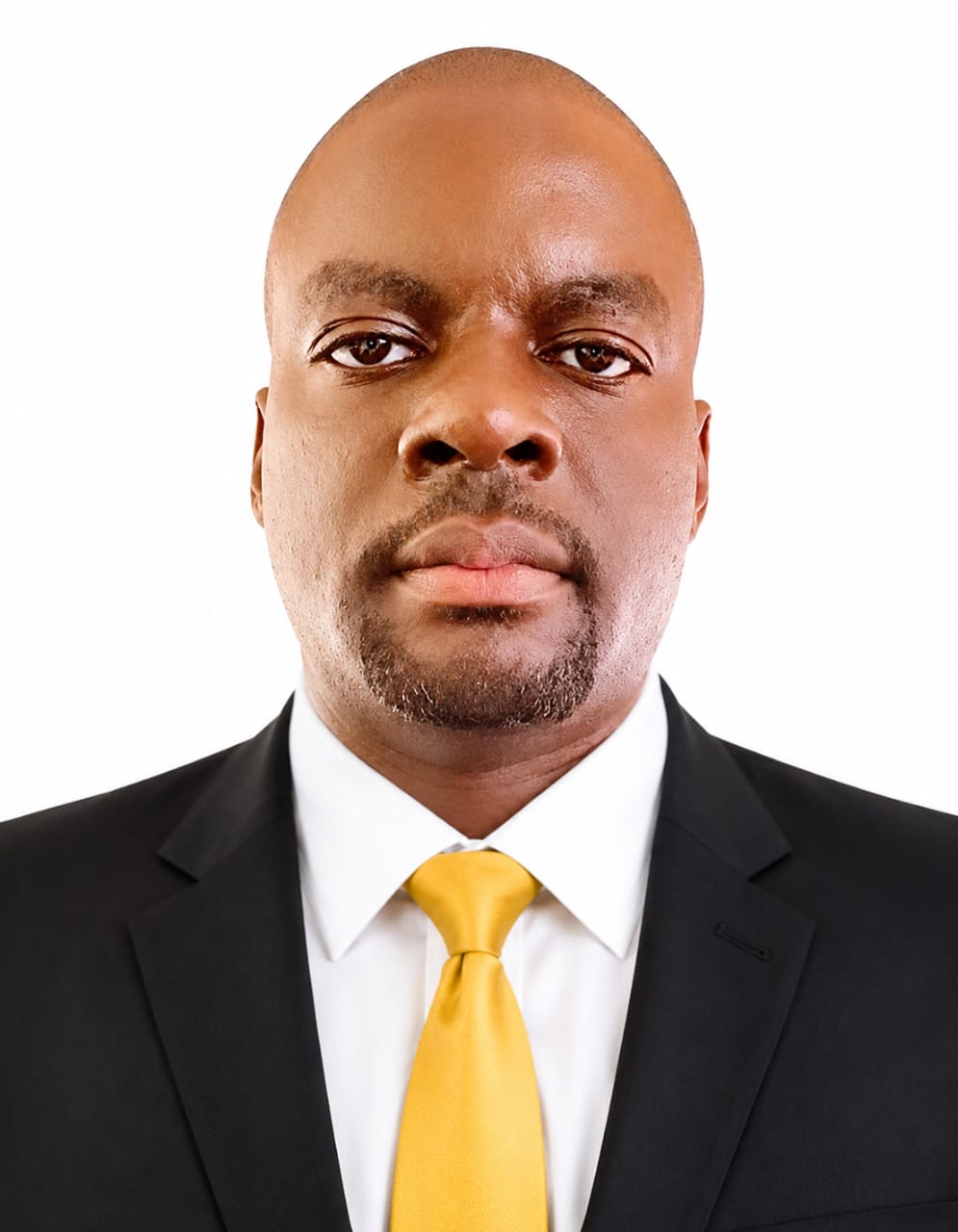
By Trevor Solomon Baleke
Saturday, August 22, 2026, started what initially looked like another clever piece of radio publicity. Bridge FM 89.8 teased its listeners that it was about to poach a “big fish” from one of the established radio stations in Jinja.
As expected, the announcement sent the local radio audience into speculation. Names were mentioned, stations were guessed and theories circulated. Many assumed that Bridge FM, being relatively new to the market, was targeting a prominent broadcaster from NBS FM, Busoga One or Busoga Royal FM.
A day later, the plot thickened. Busoga One also announced that it was preparing to unveil a “good personality” recruited from another radio station in Jinja.
Suddenly, this was no longer merely about two presenters changing workplaces. It was beginning to look like the opening of another battle for talent, audience and advertising revenue in Busoga’s increasingly competitive radio industry.
On Tuesday, August 25, the waiting ended.

Bridge FM unveiled Owekitiisa Kifubangabo Michael, popularly known among his listeners as Omulopa, one of the most recognisable and experienced Lusoga news voices in the region.
On the same day, Busoga One unveiled another familiar name: Owekitiisa Isabirye David Aga, himself an experienced broadcaster and former Member of Parliament.
Interestingly, the two are not merely broadcasters. They serve together in the information docket of Obwa Kyabazinga bwa Busoga, with Kifubangabo as Minister for Information and Aga as his deputy.
Their return to active broadcasting therefore deserves examination beyond the excitement generated by their respective unveilings.
Kifubangabo Is More Than A Newsreader
Those who have followed Lusoga broadcasting for a considerable period know that Kifubangabo is not simply another person who can sit behind a microphone and read a bulletin.
He represents a generation of broadcasters for whom mastery of language, voice, pronunciation, authority and cultural knowledge were essential ingredients of radio journalism.
Popularly called Omulopa because of his roots in Bulopa Sub-county in Kamuli District, Kifubangabo has worked for several stations during his long broadcasting career, including the defunct Kiira FM, NBS FM and, most recently, Baba FM 87.7.
He has also received several recognitions and awards during his career.
His command of Lusoga is particularly important.
There is a difference between speaking Lusoga and broadcasting professionally in Lusoga. A serious indigenous-language broadcaster must understand vocabulary, idioms, pronunciation, proverbs, cultural references and the ability to translate complicated contemporary subjects into language that an ordinary listener understands without destroying their original meaning.
That is where broadcasters such as Kifubangabo have built their reputation.
His deep, commanding voice is another commercial asset. Radio is an audio business, and voices matter. The voice that reads the news can also sell a product, introduce a programme, identify a station and, over time, become part of the station’s identity.

Bridge FM has therefore acquired much more than a news anchor.
If properly utilised, Kifubangabo can strengthen its newsroom, production department and marketing operation. His background as a teacher and lecturer could equally prove valuable, particularly in attracting educational institutions and other advertisers with whom he has built relationships over the years.
For a relatively new station trying to establish itself in a crowded market, acquiring such a personality sends an unmistakable message: Bridge FM wants a seat at the big table.
Aga Gives Busoga One Another Weapon
Busoga One’s unveiling of Owekitiisa Isabirye David Aga on the same day was equally significant.
Aga is no stranger to broadcasting. Before entering Parliament in 2021, he had worked with radio stations including Baba FM and Busoga One itself.
He therefore returns to familiar territory, but this time with something additional: the experience and public exposure that come with having served as a Member of Parliament.
There is speculation that Aga could eventually take on greater responsibility in the Busoga One newsroom, particularly at a time when Ivan Lubega has reportedly become less regular there. Whether that speculation proves correct remains a matter for the station to confirm.
What is beyond speculation, however, is Aga’s broadcasting experience.
He has a good command of Lusoga, a recognisable voice and the ability to discuss public affairs with depth. His experience in politics should also enrich programmes dealing with governance, Parliament, public administration and current affairs.
Like Kifubangabo, Aga can be useful beyond reading news.
A good radio personality is a product, marketer and brand ambassador rolled into one. A broadcaster who already commands a following can attract listeners, advertisers, programme sponsors and institutional relationships.
That explains why established personalities remain attractive to radio proprietors.
The Battle For Busoga’s Airwaves
For years, competition for a sizeable share of Busoga’s radio audience has largely involved established players such as Baba FM, NBS FM and Busoga One, alongside other stations serving particular segments of the market.
Busoga One has particularly established itself as a formidable player and has previously publicised favourable audience rankings from Ipsos.
Bridge FM’s recruitment of Kifubangabo should therefore not be viewed as an isolated human-resource decision. It potentially changes the competitive equation.
Radio audiences are remarkably loyal to personalities.
A listener may claim to love a station when, in reality, he loves three presenters on that station. Move those three personalities elsewhere and you may discover where his loyalty actually lies.
That is why poaching a household name can deliver an immediate audience boost.
But there is an important warning here.
A famous presenter can bring listeners to a station; only a good station can keep them there.
Bridge FM must understand this distinction.
Kifubangabo may attract curiosity and bring part of his existing audience with him, but retaining those listeners will depend on much more: signal quality, programming, newsroom credibility, music selection, presenters surrounding him, management, marketing, digital presence and consistency.
One star player does not automatically make a championship team.
The Dangerous Salary War
The simultaneous recruitment of Kifubangabo and Aga may understandably cause anxiety among competing stations.
That anxiety must, however, be managed intelligently.
One of the biggest mistakes radio managers can make when competitors start poaching talent is to panic and enter an unsustainable salary war.
Suppose a station earns Shs100 million in sustainable monthly revenue but, because of competition, builds a wage bill and operating structure requiring Shs130 million. It may have retained its stars, but it has created a bigger problem than the one it was trying to solve.
Radio is both a public institution and a business.
Salaries must ultimately be supported by revenue.
Management must therefore ask a difficult question whenever a presenter demands more money: What measurable value does this individual add to the business?
Having a famous name is not enough.
Does the presenter attract advertising? Does he retain listeners? Can programmes under his stewardship attract sponsorship? Does his digital content generate engagement? Does he protect the credibility of the station? Does his presence help other programmes?
If the answers justify the investment, pay him competitively.
If they do not, merely matching a competitor’s offer because management fears losing a “big name” can become commercial suicide.
But Doing Nothing Is Equally Dangerous
There is another extreme that managers must avoid.
When valuable employees leave, some managers dismissively say: “Nobody is bigger than the station.”
Technically, that is true.
But it can also become a convenient excuse for poor management.
No employee should be bigger than an institution, but institutions must recognise the people who make them successful.
If your best journalists, presenters, marketers and producers repeatedly leave for competitors, management should not simply blame disloyal employees. It must examine remuneration, working conditions, leadership, career progression, recognition and organisational culture.
Sometimes the competitor is not stealing your employee.
Your own management failures are pushing the employee through the competitor’s door.
There must therefore be a balance between financial discipline and talent retention.
NBS FM Offers An Important Lesson
NBS FM provides an interesting case study in what can happen when several recognisable personalities leave within a relatively short period.
The departure of personalities such as Lubowa Kyemba, Rogers Mbajjwe and Resty Nanteza, popularly known as Nakapanchu, left gaps that are not necessarily filled simply by putting another person behind the same microphone.
The problem with losing established broadcasters is that a station does not only lose employees. It can lose relationships.
Each established presenter carries an ecosystem: listeners, callers, advertisers, sources, community contacts and personal networks.
Replacing that ecosystem takes time.
This is precisely why media houses must stop thinking about succession only after somebody resigns.
Busoga Radio’s Biggest Weakness: Failure To Manufacture Stars
The deeper problem facing many radio stations in Busoga is not poaching itself.
It is the failure to deliberately create new talent.
Too many managers wait for another station to discover, train and popularise someone before approaching that person with a better salary.
That model is expensive, lazy and ultimately unsustainable.
Every station should have a deliberate talent-development pipeline.
There should be young reporters accompanying experienced journalists into the field. Junior presenters should sit with senior broadcasters and learn programme preparation. News anchors should be coached in pronunciation, language, interviewing, ethics and delivery.
Producers must be taught how to identify talent rather than merely operate studio equipment.
The next Kifubangabo should already be sitting somewhere in a newsroom today, learning from Kifubangabo.
The next Aga should already be undergoing mentorship.
If that is not happening, Busoga’s media industry will continue recycling the same household names until those names eventually retire.
Lessons From CBS And Radio Simba
There is something Busoga media managers can learn from the longevity of stations such as CBS FM and Radio Simba.
Their strength has not depended entirely on continuously buying already-established stars from competitors. Over the years, they have demonstrated the value of identifying people with potential, exposing them to experienced broadcasters and allowing them to develop distinctive on-air identities.
That model creates institutional loyalty.
A presenter whom you discover, train, mentor and gradually introduce to listeners is more likely to have a deeper relationship with the institution than someone acquired principally through a higher salary.
More importantly, developing talent is cheaper in the long term than permanently competing for established personalities.
Radio Must Also Look Beyond The FM Dial
There is another challenge Busoga’s radio managers cannot afford to ignore.
The competition is no longer simply Baba versus NBS versus Busoga One versus Bridge FM.
The smartphone has become another radio station.
TikTok, Facebook, YouTube, WhatsApp, podcasts and other digital platforms are competing for exactly the same commodity traditional radio sells to advertisers: people’s attention.
A 20-year-old in Jinja may know a TikTok creator with 100,000 followers better than he knows the presenter of a morning radio programme.
Therefore, hiring famous traditional broadcasters without developing a serious digital strategy only solves yesterday’s problem.
Kifubangabo’s news bulletin should not die immediately after it is broadcast. Important clips can be packaged for digital audiences. Aga’s analysis can reach people who never switch on an FM receiver.
The future belongs to stations that understand that they are no longer merely radio stations.
They are content companies.
Personalities Matter, But Institutions Matter More
As someone who has spent years in journalism and previously hosted political talk shows on radio, I understand the power of a microphone and the relationship that develops between a broadcaster and his audience.
But I also know that personalities come and go.
Today a presenter is at Baba FM. Tomorrow he is at NBS. The following year he may be at Bridge FM, Busoga One or running his own digital platform.
A sustainable media institution therefore cannot be built entirely around individuals.
The strongest station is not necessarily the one with the biggest names today.
It is the station capable of creating the biggest names of tomorrow.
That requires investment in training, mentorship, professional management, research, technology, fair remuneration and succession planning.
Competition Should Improve Busoga Broadcasting
Ultimately, the arrival of Kifubangabo at Bridge FM and Aga at Busoga One should be good news for the industry if managers respond correctly.
Competition should force stations to improve their journalism.
It should improve remuneration where revenue permits.
It should improve programme quality.
It should make managers invest in research rather than guess what audiences want.
It should encourage stations to strengthen their digital platforms.
Most importantly, it should force media houses to identify and develop young talent.
But if competition merely produces reckless salary wars and endless recycling of the same personalities from one station to another, Busoga broadcasting will have gained very little.
Kifubangabo and Aga are undoubtedly valuable acquisitions for their respective stations. Their experience, command of Lusoga, public profiles and established audiences give both Bridge FM and Busoga One important competitive advantages.
For Bridge FM in particular, Kifubangabo’s arrival announces the station’s ambition to compete with the established players.
The rest of the industry should take notice—but it should not panic.
The appropriate response is not simply to ask, “Which big name can we poach next?”
The better questions are: Who is the next great broadcaster sitting unnoticed in our newsroom? Who is mentoring him? What are we doing to turn him into a household name? And what kind of institution are we building so that, when he becomes one, he will want to stay?
Those questions will determine the future of radio in Busoga long after today’s transfer excitement has disappeared.
Trevor Solomon Baleke is a journalist, former political talk-show host at Baba FM 87.7 and currently serves as Deputy Resident District Commissioner of Bulambuli District. The views expressed in this article are his own.