

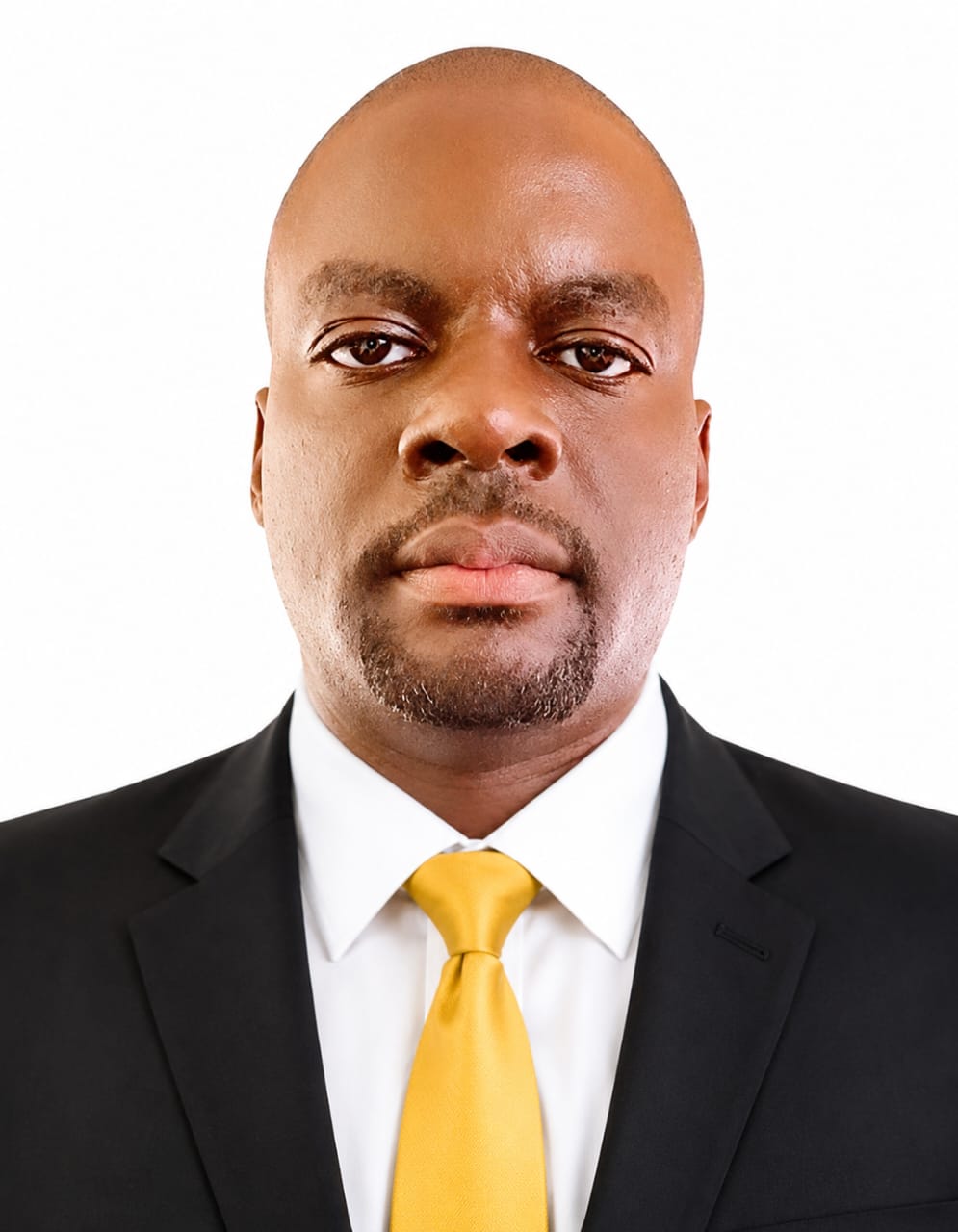
By Trevor Solomon Baleke | Jinja | August 30, 2026
Professor Oweyegha-Afunaduula’s article, “RDCs, RCCs in Uganda: Public Servants or Bricks in Constructing Patronage Chains and Networks?”, presents itself as scholarly criticism of Uganda’s governance system. Unfortunately, beneath its impressive collection of academic terminology lies an argument weakened by sweeping generalisations, questionable historical characterisations, unverified allegations and, most importantly, an inadequate treatment of the constitutional mandate of Resident District Commissioners.
One may disagree with the Government, President Yoweri Kaguta Museveni, or the institution of RDCs. That is perfectly legitimate. But disagreement does not relieve a scholar of the responsibility to distinguish constitutional functions, political interpretation and verifiable fact.
The Constitution does not create RDCs as presidential praise singers. Article 203 of the Constitution of Uganda provides for an RDC for every district, appointed by the President, and assigns that office specific responsibilities. These include monitoring the implementation of central and local government services, advising the district chairperson on matters of a national nature, carrying out functions assigned by the President or prescribed by Parliament, and coordinating government services in the district.
That constitutional foundation is strangely underdeveloped in an article whose central question is supposedly what RDCs actually are.

Professor Oweyegha-Afunaduula instead moves rapidly from criticism of individual conduct to condemnation of an entire institution. That is analytically problematic. If an RDC behaves improperly, demonstrate the misconduct. If ten RDCs fail to perform, identify the failures and measure them against their mandate. But Uganda has commissioners deployed across the country performing functions involving security coordination, monitoring government programmes, fighting corruption, resolving administrative bottlenecks and following up service-delivery failures. To reduce all these officers to “bricks” in a patronage wall requires considerably more evidence than political rhetoric.
The historical argument is equally questionable. The author tells readers that Uganda moved from “15 traditional nations” to 146 districts and lists Bugisu, Bukedi, Lango, Acholi, Madi, Moyo and others alongside kingdoms such as Buganda, Bunyoro and Tooro as though all constituted equivalent sovereign political entities.
Uganda’s pre-colonial political organisation was vastly more complicated than this convenient list suggests. Kingdoms, chiefdoms, clan-based societies and decentralised communities had profoundly different political structures. Compressing that complicated history into “15 nations” and then presenting modern district creation as their deliberate destruction may make for dramatic prose, but it does not establish causation.
Even more striking is the article’s treatment of decentralisation. Creating districts can certainly be debated. Questions about administrative costs, viability and political considerations are legitimate. But bringing administrative structures closer to citizens is not, by definition, “bantustanisation.” That is an extraordinarily loaded comparison requiring extraordinary evidence.
The weakest part of the article, however, may be its treatment of Minister for the Presidency Milly Babalanda’s alleged July 27, 2026 remarks.
The author builds much of his thesis around what he says the Minister declared, even naming individual commissioners allegedly threatened with removal. Yet an academic argument of this seriousness should provide the original statement, transcript, recording or other independently verifiable primary source and distinguish direct quotation from interpretation.
Instead, allegations become evidence and evidence becomes conclusion.
There is another fundamental misunderstanding. RDCs are presidential appointees and representatives of the Central Government. It therefore cannot automatically amount to patronage when they explain government policy, communicate government programmes or defend the record of the administration they represent. Political neutrality in the administration of public duties does not require a government representative to pretend that the Government has no policies, achievements or political programme.
The legitimate question is whether such communication replaces statutory work. That requires evidence: inspections not conducted, corruption complaints ignored, security meetings abandoned, government projects left unmonitored, or measurable deterioration attributable to commissioners spending their working hours campaigning.
The article supplies little such systematic evidence.
Instead, we encounter phrases such as “singing political praise,” “demonizing the Opposition,” “divinising the President,” “mere pawns,” “private fiefdoms” and “bricks in a wall.” These expressions may be effective political rhetoric, but repetition does not transform them into empirical findings.
There is also an interesting contradiction. The author portrays RDCs simultaneously as powerless “pawns” and enormously influential “gatekeepers” capable of determining access to government resources. Which proposition is supported by evidence? A serious institutional analysis should demonstrate precisely where their legal authority begins and ends rather than assigning whatever description best advances the argument at a particular paragraph.

Most importantly, the article overlooks what Ugandans encounter daily.
When government projects stall, RDC offices are expected to intervene. When public officials are accused of absenteeism or misuse of resources, citizens frequently petition RDCs. When implementation of programmes such as the Parish Development Model encounters difficulties, commissioners monitor and report. When disasters, security incidents, land conflicts and inter-agency disputes occur, RDCs regularly participate in coordinating the government response.
Are all RDCs perfect? Certainly not. No institution containing hundreds of human beings can make such a claim. Officers who abuse authority, engage in corruption, become unnecessarily partisan in executing administrative duties or fail to deliver should be investigated and sanctioned.
But institutional accountability is entirely different from institutional caricature.
Professor Oweyegha-Afunaduula is entitled to criticise President Museveni’s Government. He is entitled to question the continued relevance of RDCs. He may even argue that Article 203 should eventually be amended and the institution abolished. Those are legitimate propositions for national debate.
What he cannot convincingly do is begin with the political conclusion that RDCs constitute a patronage network and then selectively arrange history, terminology and allegations around that conclusion while presenting the result as demonstrated scholarship.
Uganda deserves a more sophisticated conversation.
Let us evaluate RDCs by measurable indicators: How many government projects have they monitored? How many service-delivery failures have they identified? How many corruption complaints have they referred to competent authorities? How effectively have they coordinated security structures? How quickly have government agencies responded to deficiencies identified through their monitoring?
Those questions can produce evidence.
Calling constitutional officers “bricks,” describing legitimate government communication as “praise-singing,” and invoking “bantustanisation” may produce a provocative headline, but it tells us considerably less about whether the institution is actually fulfilling Article 203.
The institution of the RDC should certainly be scrutinised. Indeed, because RDCs exercise public authority and consume public resources, scrutiny is indispensable.
But scrutiny must work both ways. Government officials must be accountable for what they do, and scholars must equally be accountable for what they write.
A title may accuse. Academic vocabulary may impress. Citations may decorate an argument. But ultimately, evidence must prove it.
And on that test, Professor Oweyegha-Afunaduula has raised questions worth debating, but he has not proved his central accusation.
Trevor Solomon Baleke works with the Office of he President. Can be reached by WhatsApp 0752009014. The views above are his own