

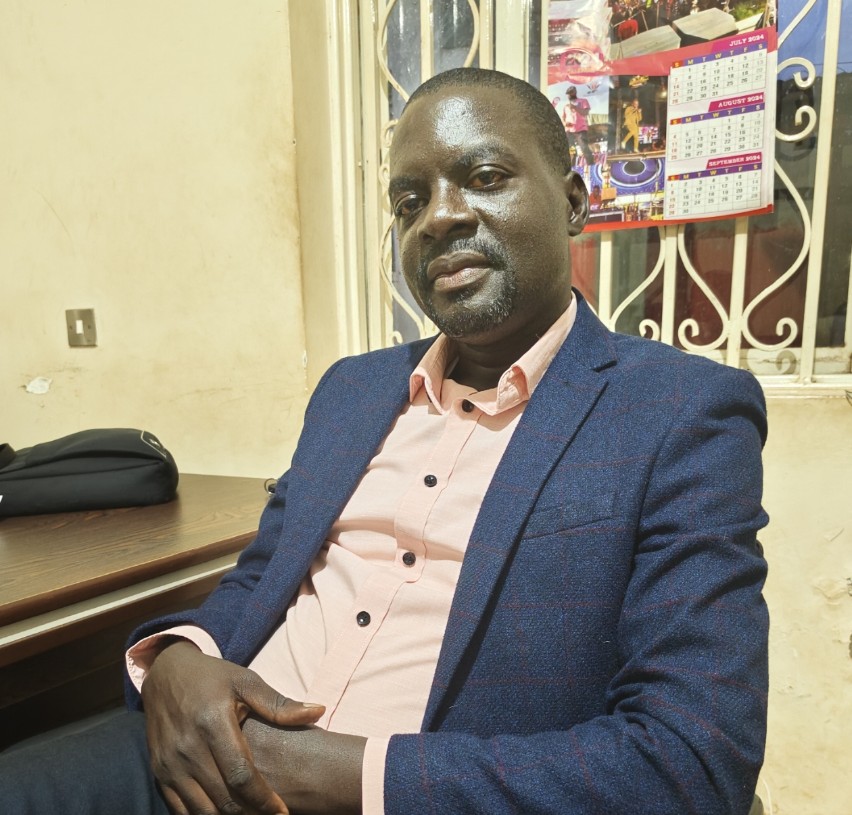
By Trevor Solomon Baleke
In recent weeks, Uganda has witnessed renewed enforcement of trade order regulations across various urban and rural trading centres. As expected with any reform that seeks to introduce structure and discipline in the economic space, reactions have been mixed. While many compliant traders have welcomed the move as timely and necessary, a section of the population has chosen to interpret it differently—some even attempting to use it as a scapegoat for their own economic shortcomings, particularly in relation to the Parish Development Model (PDM) funds.
It is important to state from the outset that trade order enforcement is neither punitive nor targeted at the informal sector. Rather, it is a deliberate government intervention aimed at restoring sanity in trade, ensuring public safety, improving urban aesthetics, and promoting structured business growth. For decades, many trading centres have developed in a disorderly manner, with encroachment on road reserves, haphazard vending, and unregulated business setups that compromise both safety and long-term economic planning.

The current enforcement, therefore, should be understood as part of a broader national development agenda that seeks to modernize commerce and create an enabling environment for sustainable enterprise.
However, it is deeply unfortunate that some individuals who have failed to prudently utilize PDM funds are now attempting to link their business failures to the enforcement of trade order. This narrative is not only misleading but also undermines the very essence of government empowerment programs designed to lift households out of subsistence into the money economy.
The Parish Development Model was never intended to be a consumption fund. It was structured as a revolving mechanism to stimulate production, encourage value addition, and strengthen household-level enterprise. Where beneficiaries diverted the funds into unsustainable ventures, mismanaged them, or failed to plan adequately, it is disingenuous to attribute subsequent losses to government regulatory actions that are clearly unrelated to internal business decisions.
Indeed, genuine business growth requires adaptability. A serious entrepreneur anticipates policy shifts, regulatory reforms, and environmental changes. Trade order enforcement does not destroy businesses; rather, it challenges them to align with structured systems that, in the long run, enhance stability and profitability. Those who have been operating informally or outside recommended trading frameworks are being encouraged to regularize—not to exit the market.
It must also be emphasized that government programs such as PDM are built on accountability and discipline. The success stories already emerging across the country are proof that when funds are properly utilized, households are able to transform livelihoods, expand enterprises, and contribute meaningfully to local economies. It is therefore unfair to allow isolated cases of mismanagement to distort the overall narrative of progress.
As leaders and citizens, we must avoid the growing tendency of externalizing failure. Not every setback is caused by policy enforcement; not every loss is the result of government action. In many cases, it is a reflection of poor planning, inadequate entrepreneurial skills, and sometimes sheer indiscipline in financial management.

Trade order enforcement and PDM implementation are not contradictory policies. In fact, they complement each other. One provides structure to the business environment, while the other provides capital to participate in that environment. Together, they are intended to build a more organized, productive, and self-reliant society.
In conclusion, Ugandans must embrace a culture of responsibility and seriousness when engaging with government development programs. It is neither helpful nor constructive to continuously search for excuses when outcomes do not meet expectations. Development requires discipline, adaptability, and honesty.
The future of our economy depends not only on government support, but equally on the willingness of citizens to take ownership of their decisions and to operate within the frameworks designed for collective progress.
The enforcement of trade order is therefore not an obstacle—it is a necessary step towards a more organized and prosperous Uganda.
The author is a Retired Journalist & Deputy RDC, Kamuli Kayunga
WhatsApp: +256752009014